Starting Point: Den Haag Centraal Station Total Estimated Walking Time: Approximately 3 hours (excluding extensive stops inside buildings or long coffee breaks). Wear comfortable shoes!
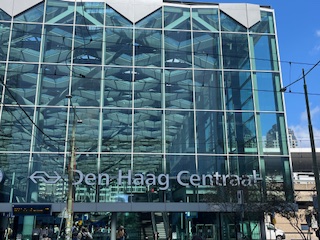
Part 1: Modern Gateway & Stately Boulevards (1 hour)
- Den Haag Centraal Station & New Babylon (Start: 0:00)
- Architecture & Real Estate: Den Haag Centraal Station is a modern, light-filled transport hub, reflecting The Hague’s role as a major city. Directly adjacent and integrated with the station is New Babylon, a striking complex of towers (hotel, offices, apartments) with a sleek glass facade. It’s a prime example of vertical, mixed-use real estate development, a “city within a city,” designed by Meyer en Van Schooten Architects and completed in 2012.
- Cultural Context: This area symbolises The Hague’s contemporary urban ambitions, connecting its role as a key transport hub with modern living and working spaces.
- Directions from arrival: Take a few moments outside the main entrance (facing the city centre) to admire the station’s contemporary design and the New Babylon towers.
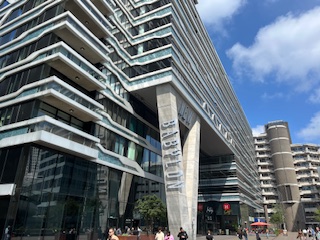

- Malieveld (approx. 5 minutes walk from Centraal Station) (0:15)
- Directions:
- From the main station exit, head straight towards the large green expanse directly ahead. This is Malieveld.
- Architecture & Real Estate: While not a building, Malieveld is a crucial urban green space framed by stately 19th-century buildings and modern office blocks. It provides a spacious transition from the transport hub to the city’s historical core. It’s valuable city real estate for public events and recreation.
- Cultural Context: Historically significant for gatherings and protests, it remains a vital open space in the city’s dense urban fabric.
- Directions:
- Lange Voorhout & Koninklijke Schouwburg (Royal Theatre) (approx. 5 minutes walk from Malieveld) (0:30)
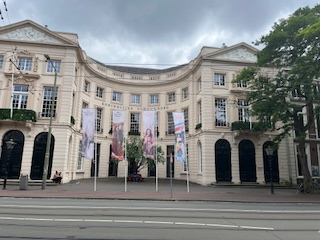
- Architecture & Real Estate: Lange Voorhout is one of Europe’s most beautiful urban squares, a wide, tree-lined avenue flanked by stately 18th and 19th-century mansions and embassies. These buildings represent some of The Hague’s most prestigious historical real estate, many now serving as diplomatic residences or cultural institutions. The Royal Theatre (originally 1804, rebuilt in the 19th century) showcases grand, formal architectural styles.
- Cultural Context: This area embodies The Hague’s elegant, diplomatic character and its long history as a seat of power and culture.
Part 2: The Political Heart & Grand Palaces (1 hour)
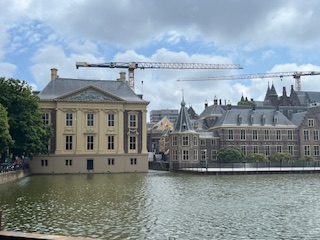
- Escher in Het Paleis & Mauritshuis (approx. 5 minutes walk from Lange Voorhout) (1:00)
- Directions:
- From Lange Voorhout, head south. You’ll quickly see the Mauritshuis (a distinctive brick building with a pond in front) and the adjacent Escher in Het Paleis (a former palace). They are very close to each other.
- Architecture & Real Estate:
- Escher in Het Paleis: Originally the Winter Palace of Queen Emma, this beautiful 18th-century palace now houses the Escher Museum. Its grand aristocratic architecture offers a glimpse into royal and noble living.
- Mauritshuis: This iconic 17th-century building was originally the residence of Count John Maurice of Nassau and is a prime example of Dutch Golden Age Classicism. It now houses a world-renowned art collection. Its elegant proportions and brick-and-stone facade are architectural masterpieces.
- Cultural Context: These buildings are pivotal cultural institutions, showcasing both Dutch history and world-class art within historically significant real estate.
- The Binnenhof complex is directly adjacent to the Mauritshuis, separated by a small pond (Hofvijver).
- Directions:
Binnenhof (Dutch Parliament) (approx. 2 minutes walk from Mauritshuis) (1:20)
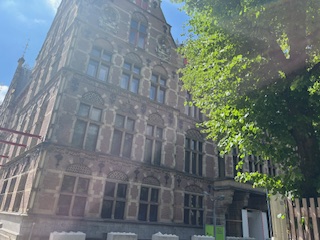
- Directions:
- The Binnenhof complex is directly adjacent to the Mauritshuis, separated by a small pond (Hofvijver).
- Architecture & Real Estate: The Binnenhof is the historic heart of Dutch politics, a complex of buildings dating from the 13th century (Ridderzaal – Knight’s Hall) to later additions. It includes the Dutch Parliament (States General) and the Prime Minister’s office. Its blend of medieval, Gothic, and later architectural styles, situated around a central courtyard, makes it a unique and powerful real estate symbol of governance.
- Cultural Context: This is where Dutch national history and contemporary politics unfold. It’s the most iconic ensemble of government buildings in the Netherlands.
Part 3: Urban Revival & Peace Icon (1 hour)
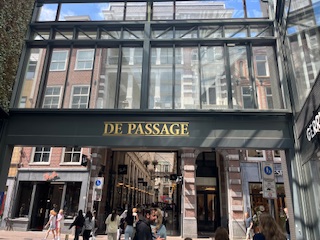
- Grote Kerk (St. James’ Church) & City Centre Shopping (approx. 10 minutes walk from Binnenhof) (2:00)
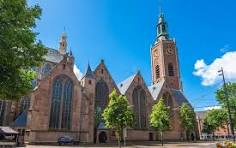
- Grote Kerk (St. James’ Church) & City Centre Shopping (approx. 10 minutes walk from Binnenhof) (2:00)
- Directions:
- From the Binnenhof, walk northwest along the Buitenhof square, then follow the signs towards the city center’s main shopping areas.
- The Grote Kerk (St. James’ Church) will soon dominate the skyline. It’s located at Rond de Grote Kerk.
- Nearby, you’ll find the historic Passage (a beautiful covered shopping arcade) and the modern architectural interpretation of Haagse Bluf.
- Architecture & Real Estate:
- Grote Kerk: A large, imposing Gothic church dating back to the 15th century. Its sheer size and historic brickwork are impressive, offering a sense of the city’s medieval origins.
- Passage: One of the oldest shopping arcades in the Netherlands (late 19th century). Its glass roof, ornate detailing, and period architecture make it a charming example of historic commercial real estate.
- Haagse Bluf: A modern shopping development that cleverly integrates and reinterprets historic facades from various periods, creating a whimsical and unique retail experience. It’s an example of creative urban infill.
- Cultural Context: This area blends historical religious architecture with vibrant commercial life, showing how the city integrates its past with modern consumption.
- Directions:
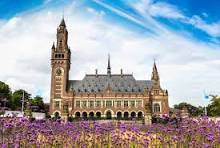
- Peace Palace (Vredespaleis) (approx. 25-30 minutes walk from Grote Kerk) (2:25)
- Directions: This is the longest walk segment of the tour, but essential for The Hague’s identity.
- From the Grote Kerk, head north-west on Prinsegracht.
- Continue straight onto Zoutmanstraat, then Laan van Meerdervoort.
- Turn right onto Carnegieplein. The Peace Palace will be straight ahead.
- Alternatively, if time is very tight or for less walking: From the city center (e.g., tram stop at Spui or Centrum), you can take Tram 1 (towards Scheveningen Noorderstrand) or Tram 17 (towards Statenkwartier) to the ‘Vredespaleis’ stop, which drops you right there. This will save about 15-20 minutes of walking but adds waiting/travel time.
- Architecture & Real Estate: Completed in 1913, the Peace Palace is a masterpiece of early 20th-century architecture, designed by Louis Cordonnier. Built in a Neo-Renaissance style, its grand facade, rich materials (granite, marble, stained glass, and gifts from nations worldwide), and elaborate interior make it a global icon. It houses the International Court of Justice and the Permanent Court of Arbitration.
- Cultural Context: The Peace Palace is the quintessential symbol of The Hague as the International City of Peace and Justice, representing global diplomacy and the rule of law.
- Directions: This is the longest walk segment of the tour, but essential for The Hague’s identity.
Concluding the Walk (3:00):
- From the Peace Palace, you can find a tram stop nearby (e.g., at Carnegieplein or Laan van Meerdervoort) to take a tram back to Den Haag Centraal Station or your next destination. Trams 1 and 17 connect directly back to the city centre and Centraal Station. Alternatively, walk back and enjoy the sights os the Hague!
 School of the Built Environment Oxford Brookes