New Street Station
Our tour starts at New Street Station
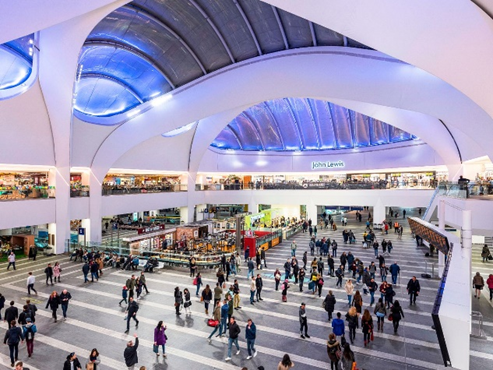
Birmingham New Street is the largest and busiest of the three main railway stations in Birmingham city centre, England. It is a central hub of the British railway system. It is a major destination for Avanti West Coast services from London Euston, Glasgow Central and Edinburgh Waverley via the West Coast Main Line, the Cross Country network, and for local and suburban services within the West Midlands, including those on the Cross-City Line between Lichfield Trent Valley, Redditch, and Bromsgrove, and the Chase Line to Walsall and Rugeley Trent Valley. The three-letter station code is BHM.
The station is named after New Street, which runs parallel to the station, although the station has never had a direct entrance except via the Grand Central shopping centre. Historically, the main entrance to the station was on Stephenson Street, just off New Street. As of 2020, the station has entrances on Stephenson Street, Smallbrook Queensway, Hill Street and Navigation Street.
New Street is the fifth busiest railway station in the UK and the busiest outside London, with 46.5 million passenger entries and exits between April 2019 and March 2020. It is also the busiest interchange station outside London, with just over 7 million passengers changing trains at the station annually. In 2018, New Street had a passenger satisfaction rating of 92%, the third highest in the UK.
The original New Street station opened in 1854. At the time of its construction, the station had the largest single-span arched roof in the world.[4] In the 1960s, the station was completely rebuilt. An enclosed station, with buildings over most of its span and passenger numbers more than twice those it was designed for, the replacement was not popular with its users. A £550m redevelopment of the station named Gateway Plus opened in September 2015. It includes a new concourse, a new exterior facade, and a new entrance on Stephenson Street.
Grand Central
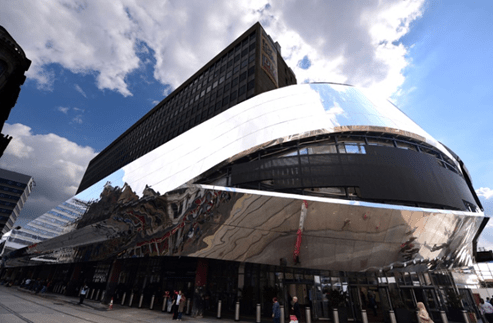
Grand Central is a major shopping centre located above New Street railway station in Birmingham, England, that opened on 24 September 2015. It is currently owned by Hammerson and CPPIB, having been acquired by Hammerson from Birmingham City Council in January 2016 for £335m.
As part of the Birmingham New Street station Gateway Plus redevelopment, Grand Central underwent a major overhaul. The mall has been redesigned with a Texlon ETFE atrium roof as centrepiece, and is home to over 60 stores across 500,000 sq ft.
The shopping centre has lent its name to the adjacent tram stop that opened in May 2016
- Walk around Grand Central
- Who are the major occupiers?
The Mailbox
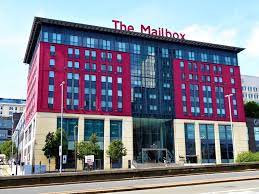
Make your way onto Stevenson Street and turn left onto Pinfold Street. Head towards the Mailbox.
The Mailbox opened in 1998 and was the redevelopment of the former Royal Mail sorting office in Birmingham City Centre.
The Mailbox is one of the UK’s largest mixed-use buildings incorporating retail, leisure, offices and residential in a well-managed, security patrolled complex of the highest quality. Harvey Nicholls and designer stores blend in well with restaurants, leisure, and apartments.
The Cube
Located to the rear of the Mailbox is The Cube. Walk Soth West towards Holiday passage, turning right into Commercial Street
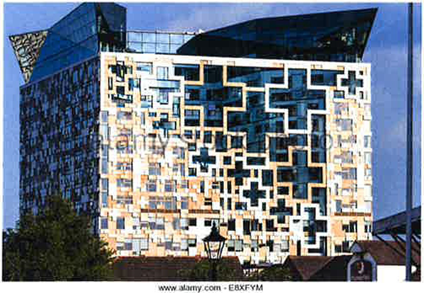
Designed by Ken Shuttleworth, Birmingham’s iconic landmark, The Cube is an outstanding 25-storey structure houses an impressive mix of prime office, retail and restaurant spaces, aspirational apartments, a boutique hotel, exclusive canal side restaurants, skyline champagne bar, luxury spa facilities, and the UK’s largest automated car park.
High profile names established at The Cube include Marco Pierre White’s Steakhouse Bar & Grill, The Club & Spa, Rodizio Rico Brazilian restaurant, Bun & Bowl burgers & shrimp, Shogun Teppanyaki, Madeleine fine coffee house and Hotel Indigo.
Perfectly situated in the heart of the city, The Cube is next to The Mailbox and a few minutes’ walk from the ICC, The Bullring, Brindley place and New Street Station.
Gas Street Basin
In close proximity to the Mailbox is Gas street basin. Proceed along Gas Street taking time to explore the basin.
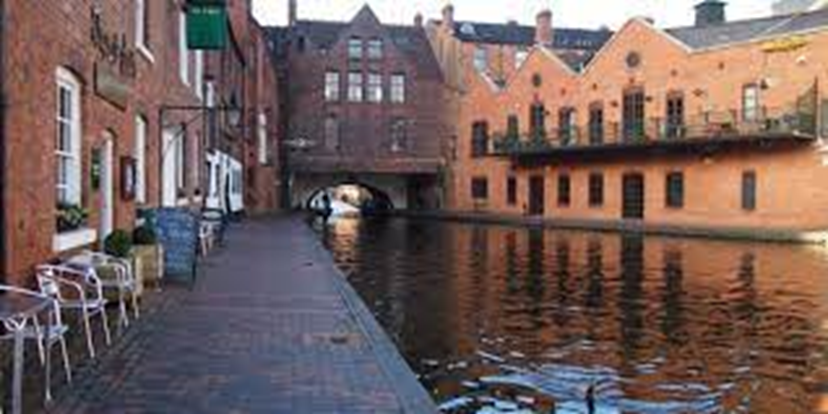
Gas Street Basin is the heart of Birmingham’s canal network. In days gone by it was the hub of a thriving canal transport network and would have been alive with the sound of cargoes as diverse as chocolate crumb, coal and glass being loaded and unloaded. Historically, Gas Street Basin was the meeting point of the Worcester & Birmingham Canal and the Birmingham Canal Main Line. Gas Street was the first street in the city to have gas lighting.
Today, the bars and restaurants of Brindley Place cluster around this attractive basin where traditional narrowboats and industrial heritage meets modern, cosmopolitan living.
Brindley Place & International Conference Centre
Walk Northwest towards Broad Street and turn left into Brindley Place.
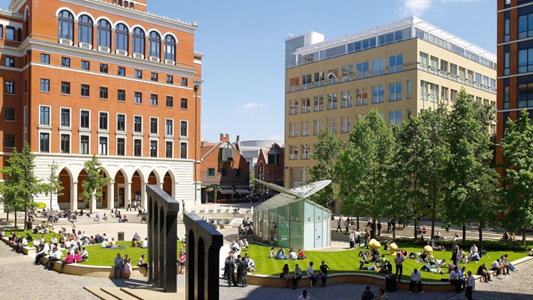
Broad Street (famous for all the bars) is where President Clinton tasted his first pint) Brindley Place encompasses more bars and restaurants through to a central square where there are offices.
As you walk into Brindley Place you will see the International Conference Centre (ICC) over the canal. This walk takes you past Sea Life Centre. As you cross over the canal you will see the first residential to be built in Birmingham City Centre at the start of its renaissance in the late 1990’s.
- Look at the ground floor uses versus upper floors.
- How many storeys are the buildings? Is there a change in building height?
- What about permeability and the building materials?
- What is the character of this area?
- What do you think about the public realm, use of open spaces and sense of place?
- Has the developer been sensitive to the site’s heritage?
Background to Brindley Place
The name Brindley Place honors James Brindley, original engineer of the Birmingham Canal and many other waterways. Emerging from Gas Street Basin on to Broad Street, you are just five minutes from New Street Station and the Bullring. The surrounding area is a vibrant arts and entertainment area including the International Convention Centre, the National Indoor Arena, the Rep and much more.
Brindley Place is a mixed-use development built around three attractive public squares – Brunswick, Central and Oozells. Alongside this the estate includes The Water’s Edge, The Crescent Theatre, National Sea Life Centre and is positioned adjacent to Birmingham’s first city centre residential development, Symphony Court.
The area now occupied by Brindley Place was, at the height of Birmingham’s industrial past, the site of factories. By the 1970’s, however, as Britain’s manufacturing went into decline, the factories closed and the buildings lay derelict for many years.
The development history of Brindley Place
This section might give you some idea of just how long a new development can take to build
- July 1987 Developers were invited by Birmingham City Council to draw up a blueprint for the vacant 26 acres of land adjacent to the International Convention Centre (ICC). The site was leased to a consortium of three companies; Merlin, Shearwater and Laing (MSL) who planned to create a ‘huge leisure and entertainment area’.
The Masterplan: MSL paid £23 million for the development rights; much of which was used to build the National Indoor Arena (NIA). Their proposal was for a £200 million development which included the NIA, a visitor led Festival Market (which was later shelved by Rosehaugh as being financially unviable) and National Aquarium.
- July 1990
Merlin pulled out of the scheme due to fears about the property slump and the project was taken
over by Shearwater’s parent company, Rosehaugh, which subsequently set up Brindley Place Pie as a subsidiary company to oversee the development.
- December 1991
Rosehaugh re-looked at the masterplan for the development and working with Birmingham City Council drew up a new exciting proposal for a high-quality, mixed-use development.
The development included 19 restaurants, shops, and bars in Birmingham’s first ever purpose designed leisure venue overlooking the canals. The development proposals also contained 120 new homes to encourage more people to live in the city, rather than outside of it (this would become Symphony Court). There was 1,100,000 sq ft of offices, which would create 6,000 jobs. The leisure element was not certain but possible options at the time were Science of Sport, cinema, bowling alley. The existing Crescent Theatre was also to be rebuilt on Brindley place.
- July 1992
Outline planning permission was gained. This meant that the scheme would be implemented in phases and, led by market demand, employ 6,000 people on completion. It wasn’t all plain sailing… The obstacles had not only been financial, but ecological! In the recession, progress had been slow and Ecologists discovered that the site was home to a very rare Black Redstart; a bird which is a protected species. Work could not begin until the birds migrated.
- November 1992
Rosehaugh’s shares were suspended at 7.Sp where they had once traded at 925p. The company’s debts were reported to be at £350 million. After an anxious wait Brindley Place was declared to be safe and Brindley Place pie continued its work.
- June 1993
Argent Group Pie, a privately owned UK property company, purchased Brindley Place for an undisclosed sum
The Official Launch: Workmen moved onto site on 6 September 1993 and the building project was launched on 29 September 1993. The first part of the development to be completed was The Water’s Edge – a canal side scheme of shops, restaurants and bars which was officially opened in November 1994.
Ownership: Much of the Brindley Place estate is owned by Hines Global REIT, Inc. and Lone Star following the acquisition of eight buildings from The Brindley Place Limited Partnership in 2010. The
exceptions to this are Eleven Brindley Place, The Hilton Garden Inn Hotel, The National SEA LIFE Centre and finally The Water’s Edge element of Brindley Place which is owned by British Airways Pension Fund. The estate is managed by Bilfinger GVA’s Birmingham office which is based at Three Brindley Place.
Centenary Square & Arena Central
Head up Broad Street and turn right into Centenary Square
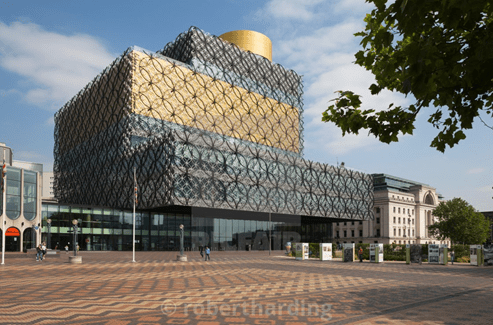
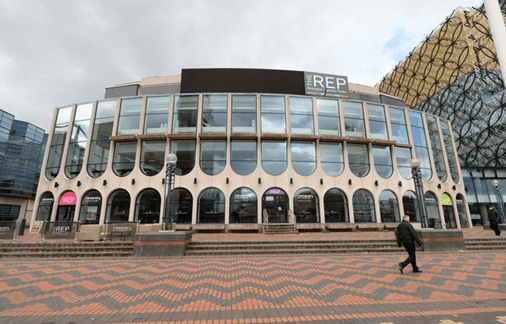
Centered in Centenary Square is the new library designed to embrace the links to the Jewelry Quarter with the filigree cladding. The ground floor is shared with the Rep Theatre next door.
The Repertory Theatre (The Rep)
Arena Central
In the video it pans across to HSBC building forming part of Arena Central.
How significant is that to the economic viability of the city and attracting other businesses?
Paradise Circus
From Broad Street, continue towards Centenary Way and onto Paradise Circus/ Chamberlain Street
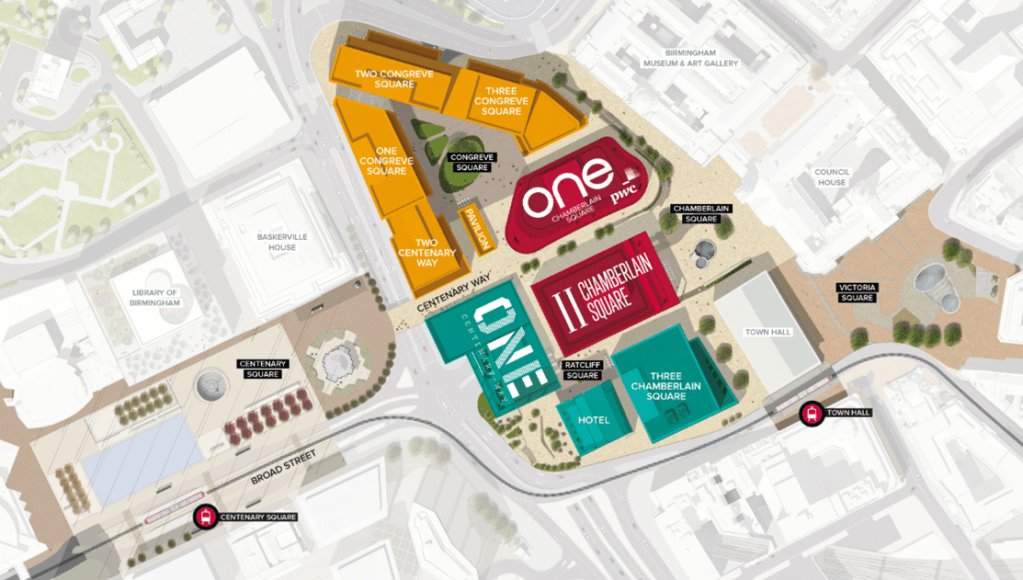
Paradise is a redevelopment by Argents (developers of Brindley Place, Birmingham and Kings Cross, London) into Victoria Square.
Paradise, formerly named Paradise Circus, is the name given to an area of approximately 7 hectares (17 acres) in Birmingham city centre between Chamberlain and Centenary Squares. The area has been part of the civic centre of Birmingham, England since the 19th century when it contained buildings such as the Town Hall, Mason Science College, Birmingham and Midland Institute buildings and Central Library. The site was redeveloped from 1960 to 1975 into the present Paradise Circus based within a roundabout on the Inner Ring Road system containing a new Central Library and School of Music.
If you are ahead of time, take a detour to look at Colmore Row and St Philips Cathedral.
Colmore Row is a street in Birmingham City Centre in the centre of Birmingham, England, running from Victoria Square to just beyond Snow Hill station. It is traditionally the city’s most prestigious business address.
Colmore Row and its environs were designated a conservation area in 1971, which was extended twice in 1985. Colmore Row itself has 23 listed buildings, two listed at Grade I and two at Grade II
Proceed to the Bull Ring via Temple Street
The Bullring Shopping Centre
If you don’t take the detour, there is now a little walk (12 minutes) to view the Bull ring. Walk Northeast from Chamberlain Square to Victoria Square
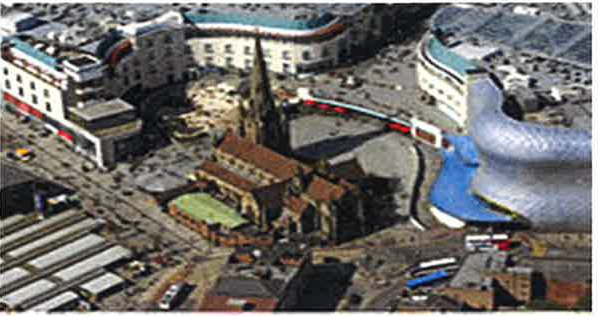
From Victoria Square with all its grand buildings walk along New Street, Birmingham’s High Street. At the end of the street is The Bullring Shopping Centre. This will take you past one of the entrances to Grand Central and New Street station (between Apple Store and HSBC). See how Apple Store has converted a very grand Victorian building formerly a banking hall. Look at the type of tenants in New Street.
The Bull Ring is a major commercial area of Birmingham. It has been an important feature of Birmingham since the Middle Ages when its market was first held. Two shopping centres have been built in the area; in the 1960s, and then in 2003; the latter is styled as one word, Bullring.
The site is located on the edge of the sandstone city ridge which results in the steep gradient towards Digbeth. The slope drops approximately 15 metres (49 ft) from New Street to St Martin’s Church.
The current shopping centre was the busiest in the United Kingdom in 2004 with 36.5 million visitors. It houses one of only four Selfridges department stores, the fourth largest Debenhams and Forever 21. Consequently, the centre has been a huge success, attracting customers from all over the world. What will happen now that Debenhams has ceased trading?
The Bullring not only exits back onto New Street, but also into Grand Central.
Millennium Point, Curzon Street, Digbeth
From the Bullring, walk along Moor Street Queensway onto Eastside. To the left is the imposing Millennium Point, opened in 2002. It was the largest landmark millennium project outside of London. It is owned by a charity, and it supports science, technology, engineering, and math’s initiatives.
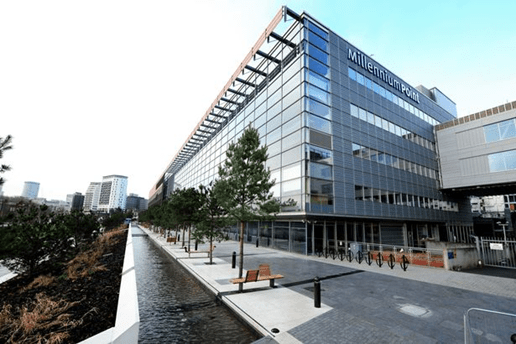
Opposite is the site of the Curzon Street Station, HS2. Beyond is Birmingham City University and Astons University.
Curzon Street Station
Watch this video and look out for glimpses of The Custard Factory
From the proposed Curzon Street station site you walk down New Canal Street past the northern part of Fazeley Street.
Continue onto Digbeth High Street and turn left. The wholesale markets site is part of a major regeneration that you will hear more about from Cushman & Wakefield. Walk down the High Street to The Custard Factory. Welcome to the heart of Digbeth.
Click on this link to discover the past, present and future of Digbeth
Custard Factory
The Custard Factory complex is set in fifteen acres (60,000m²) of factory buildings, originally constructed by Sir Alfred Frederick Bird (1849–1922), the son of Alfred Bird (1811–1878), the inventor of egg-free custard. The architectural firm commissioned to design the building was Hamblins. The architect may have been Augustus William Brenchley Macer-Wright who married Ellen Kate Hamblin, known as Jenny, who was the daughter of the man behind the architect firm’s name. There is no positive evidence in Birmingham City Archive. At one time, a thousand people worked there.
After the Bird company’s departure to Banbury in 1964, the buildings were redeveloped from 1992, in two initial phases. The architect for the redevelopment project was Birmingham-based Glenn Howells Architects. The redevelopment of the Custard Factory began in January 1992 when the project was given £800,000 as a City Grant Award. This public sector funding levered in £1.6 million of private sector investment for the refurbishment of 100,000 sq ft (9,300 m2) of redundant buildings, providing 145 units for use by artists, designers, and communicators.

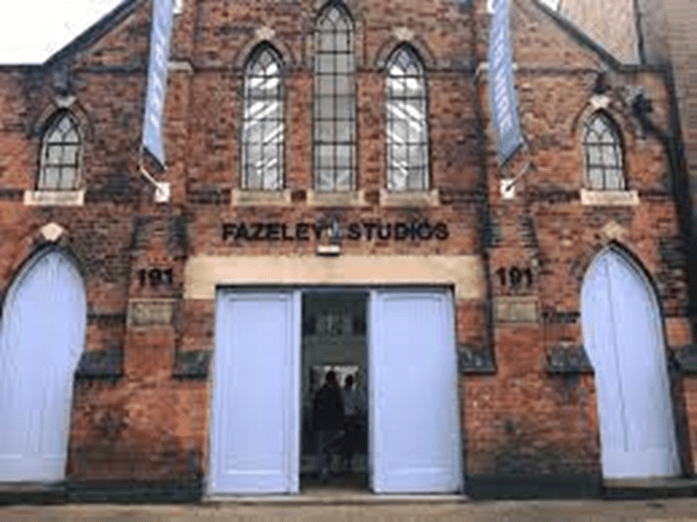
Fazeley Studios
Continue down Heath Mill Lane
Turn left and walk along Fazeley Street you will find The Bond, a restored Victorian warehouse with wharf and café and now a popular wedding venue.
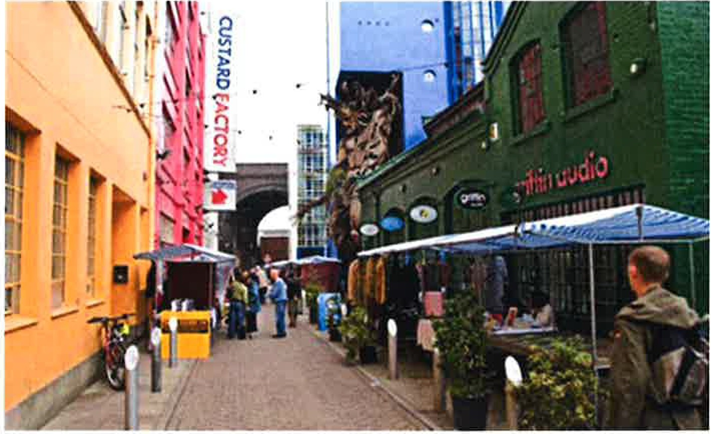
Nearly opposite The Bond is Fazeley Studios, home to a number of SME’s in the creative industries, as well as being another popular wedding venue. This is where we will be based for the afternoon
If you are a little early continue to walk around Digbeth –note the red brick buildings and railway arches that dominate the area. Remember that 30 years ago the land where Brindley Place now stands looked like this. That is why development, and the Built Environment is such an exciting place to work. You really can make a difference to so many lives.
 School of the Built Environment Oxford Brookes